Avery Vogel · 21 September 2026
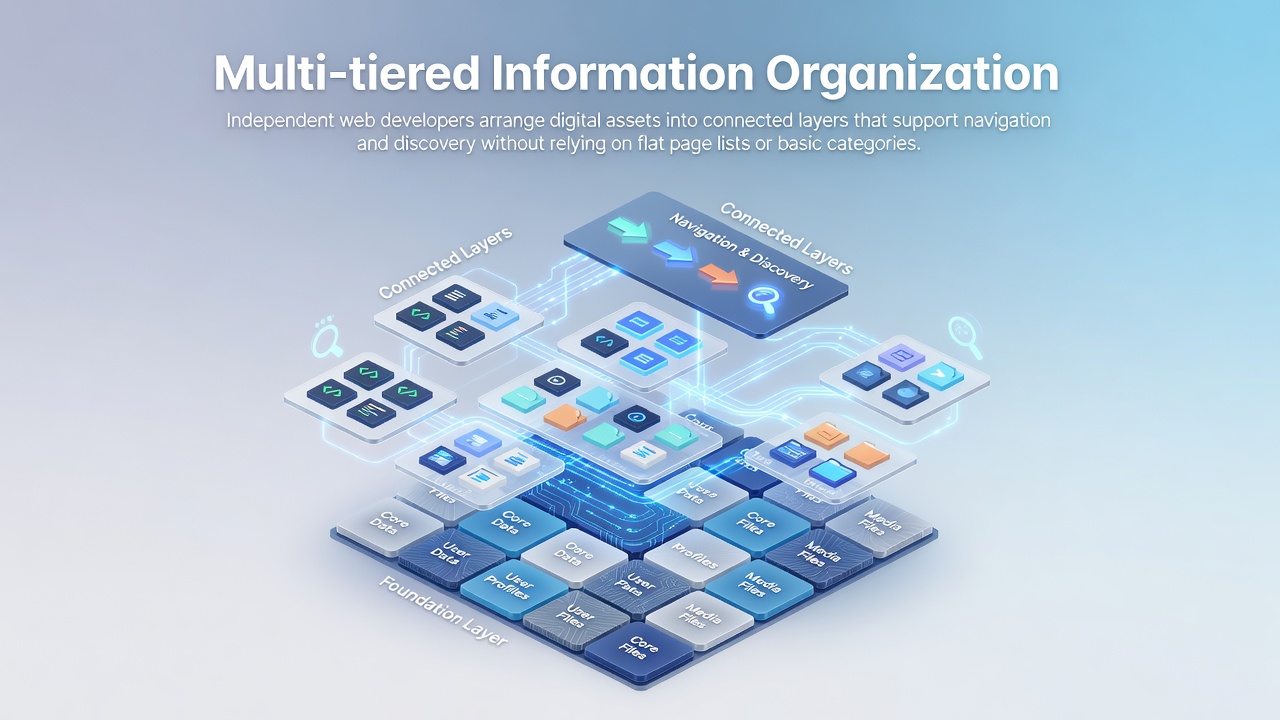
Multi-tiered information organization lets independent web developers arrange digital assets into connected layers that support navigation and discovery without relying on flat page lists or basic categories
Independent web developers have shifted toward multi-tiered information organization as a way to structure digital assets across connected layers that enhance both navigation and discovery. This approach moves beyond flat page lists or basic categories by creating hierarchical connections where each tier builds on the previous one, allowing users to traverse content through logical pathways rather than linear scrolling or simple menus. Data from web analytics platforms indicate that sites using layered structures see improved user retention metrics, with session durations extending by measurable percentages in controlled comparisons.
Core Components of Layered Asset Arrangement
Multi-tiered systems rely on distinct levels that include foundational data storage, intermediate relational mapping, and surface-level presentation elements. Developers assign assets such as images, documents, and code snippets to specific tiers, then establish connections through metadata tags and relational databases that link items across layers. Research from information architecture studies shows these connections reduce the cognitive load on visitors, since pathways emerge dynamically based on user queries instead of predefined flat indexes. Those who've implemented such systems note that initial setup involves auditing existing assets to identify natural groupings, after which algorithms or manual rules define how tiers interact during site rendering.
One implementation example involves a developer organizing a portfolio site where the base tier holds raw media files, the middle tier connects them via thematic clusters, and the top tier generates context-aware menus that adapt to visitor history. This setup avoids the limitations of category tags alone by enabling cross-tier queries that surface related assets automatically.
Implementation Practices Among Independent Developers
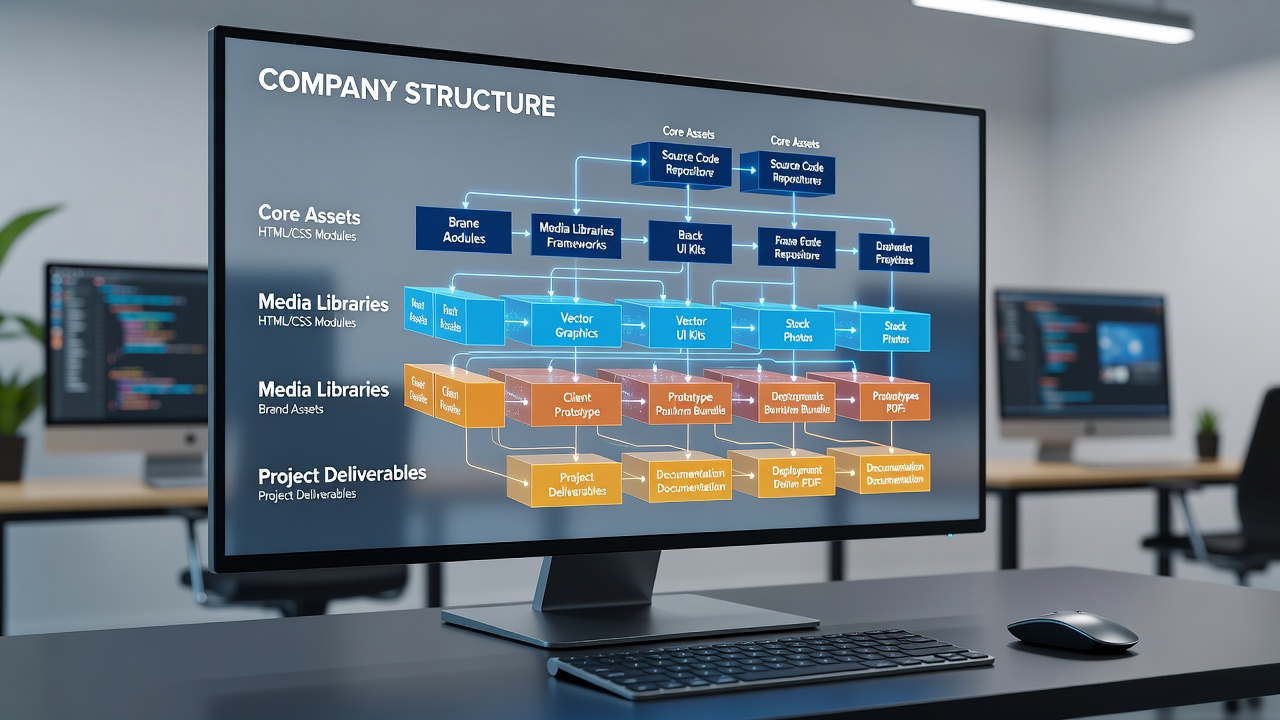
Independent developers often start by selecting open-source frameworks that support hierarchical data models, such as those built on graph databases or nested content management systems. They map digital assets into tiers using scripts that parse file properties and assign relational attributes, ensuring each layer maintains its own integrity while feeding into higher structures. According to reports from the World Wide Web Consortium on semantic web practices, these methods align with standards for linked data, which facilitate discovery without requiring exhaustive manual categorization. What's notable is how small teams integrate version control tools to track changes across tiers, preventing fragmentation as projects scale.
But here's the thing: successful arrangements depend on consistent metadata standards applied from the outset. Developers test navigation flows through user simulations that measure how quickly assets surface from different entry points, refining connections based on observed patterns rather than assumptions. In September 2026, several regional web development conferences highlighted updated toolkits that automate tier linking, drawing on datasets from European digital infrastructure projects to demonstrate efficiency gains in real-world deployments.
Navigation and Discovery Outcomes
Connected layers support navigation by generating contextual breadcrumbs and recommendation paths that evolve with user interaction. Discovery improves because assets in lower tiers become accessible through multiple upper-layer entry points, expanding reach without duplicating content. Figures from academic reviews of information retrieval systems reveal that layered organizations yield higher precision in search results compared to flat structures, as relational data allows for nuanced filtering. Observers note that independent sites employing this method often integrate API endpoints at each tier to enable external applications to query assets selectively, broadening distribution channels.
Take one case where a solo developer restructured a resource library: assets moved from a single directory into tiers based on relevance and update frequency, resulting in automated suggestion features that pulled from connected layers during user sessions. Such outcomes align with findings from Australian research institutions on adaptive web interfaces, where layered designs contributed to sustained engagement across diverse user groups.
Challenges and Adaptation Strategies
Setting up multi-tiered systems requires careful planning to avoid overcomplication in the relational mappings. Developers address this by starting with minimal viable tiers and expanding based on usage data collected over weeks or months. Industry reports from North American technology associations emphasize the value of modular code that isolates each layer, making updates simpler without affecting the entire structure. Those who've studied adoption patterns find that combining these systems with basic analytics tools helps identify underused connections early, allowing refinements that maintain performance.
Yet adjustments remain ongoing because content volume changes and new asset types emerge, demanding periodic reviews of tier definitions. External sources like university-led studies on digital asset management provide frameworks for evaluating scalability, guiding independent practitioners toward sustainable practices that evolve alongside project needs.
Conclusion
Multi-tiered information organization equips independent web developers with methods to arrange assets into interconnected layers that prioritize effective navigation and discovery. Evidence from standards bodies and research sources continues to support its role in moving past flat lists toward more dynamic content ecosystems. As practices advance through 2026 and beyond, these approaches integrate with emerging tools that automate connections while preserving developer control over structure and flow.