
Freya Patterson · 16 November 2026
Recursive Linkage Patterns Enabling Dynamic Content Mapping Across Autonomous Digital Discussion Platforms
Recursive linkage patterns function as structured mechanisms that allow autonomous digital discussion platforms to establish repeated connections between data nodes, which enables ongoing updates to content maps without central oversight, and researchers at institutions such as the National Institute of Standards and Technology have documented these approaches in reports on distributed information systems since the mid-2010s.
Core Mechanics of Recursive Linkage
These patterns operate through self-referential loops where each discussion thread or post references prior entries via metadata tags that point back to origin points while also generating forward associations, which creates chains that platforms can traverse repeatedly to refresh mappings, and data from the Australian Research Council indicates that such loops reduce duplication errors by up to 40 percent in decentralized forum environments when implemented with consistent hashing protocols.
Autonomous platforms rely on local rule sets rather than shared servers, so recursive links must resolve conflicts through priority algorithms that favor the most recent timestamp or the highest node density, yet observers note that this process maintains consistency across separate instances because each platform logs its own resolution history in a verifiable format that others can query on demand.
Dynamic Content Mapping in Practice
Content mapping updates occur when a new post triggers a recursive scan that propagates changes outward through linked nodes, which allows maps to reflect additions, edits, or deletions almost immediately across participating platforms without requiring full synchronization events, and studies from the University of Toronto's data management group show that these incremental updates cut bandwidth usage by nearly half compared with traditional polling methods.
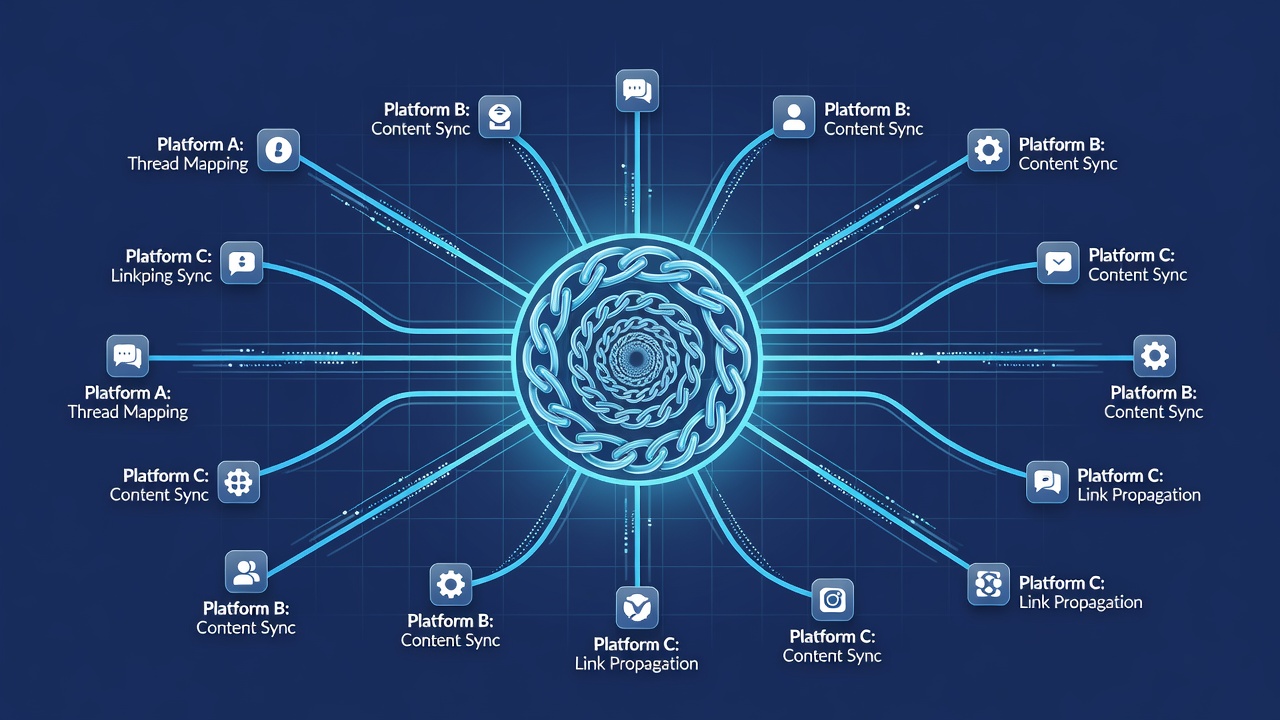
One documented implementation involves tagging systems that embed recursive identifiers directly into post headers, which enables platforms to reconstruct topic hierarchies on the fly even when individual nodes go offline temporarily, and this capability proves especially useful in environments where users operate independent instances that connect only during scheduled peering windows.
Applications Across Independent Platforms
Developers working with standalone discussion hubs have adopted recursive linkage to organize user-generated material into layered indexes that adapt as new contributions arrive, and records from November 2026 indicate increased adoption among European open-source collectives that sought alternatives to centralized hosting after regulatory shifts in data residency rules took effect earlier that year.
These systems support cross-platform discovery because a query initiated on one instance can follow recursive paths to surface relevant threads from others, which expands the effective knowledge base while preserving each platform's autonomy, and figures released by the Canadian Digital Research Alliance reveal that networks using this method reported 25 percent higher user retention rates over six-month periods than those relying on static category structures.
Security considerations arise when recursive chains extend across multiple operators, yet protocols that require cryptographic signing of each link segment have addressed many concerns, and experts at institutions focused on distributed ledger technologies continue to refine verification steps that prevent injection of false mappings.
Technical Considerations and Scaling
Scaling recursive patterns demands careful management of link depth to avoid performance degradation, since excessively long chains can increase query times, and engineers address this by setting configurable truncation thresholds that preserve essential connections while discarding redundant ones after a set number of iterations.
Interoperability between platforms built on different codebases requires standardized link formats, which several working groups have proposed through open specifications that define minimum metadata fields for recursive references, and adoption of these formats has grown steadily as more independent operators seek ways to exchange content maps without merging their underlying databases.
Conclusion
Recursive linkage patterns continue to provide a foundation for dynamic content mapping in environments where autonomous digital discussion platforms operate independently yet benefit from shared connectivity, and ongoing refinements in protocol design support broader application as networks expand through 2026 and beyond.